ServicesChlorine & Chloramine Removal
Chlorine & Chloramine Removal in Pinellas Park
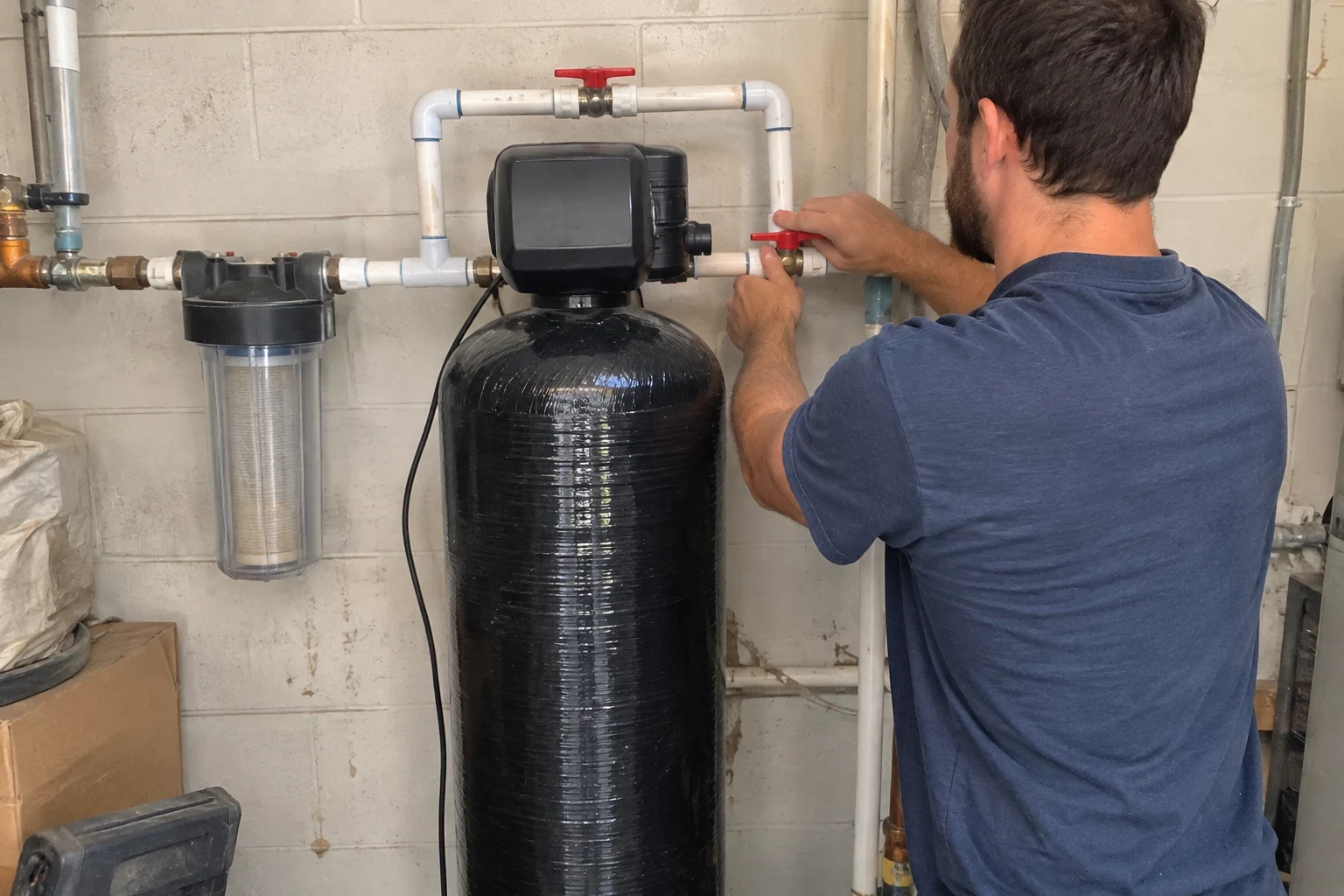
We install whole-home carbon systems that strip chlorine and chloramine from the water before it reaches your showers, faucets and water heater. We size the carbon bed to your household's flow, protect your floors and yard while we work, and explain each step before we start.
Why chloramine needs a different filter
Utilities add a disinfectant so water stays safe across miles of pipe on its way to your home. Some use chlorine alone. Many now use chloramine, a compound of chlorine and ammonia that holds up longer in the mains. Your utility's annual water quality report states which one it uses, and we can read through that report with you on the phone.
The difference matters for the filter. Plain chlorine breaks down quickly on ordinary granular activated carbon. Chloramine is far more stable, so it needs catalytic carbon, which has a modified surface that speeds the reaction, plus enough media depth that water stays in contact with the carbon long enough. An undersized tank or a pitcher-style cartridge lets most chloramine pass straight through.
That's why we start with sizing, not a stock unit. Media volume, tank diameter and service flow rate are matched to the bathrooms and fixtures in your home so you get treated water at full pressure.
What the installation includes
Catalytic carbon tank
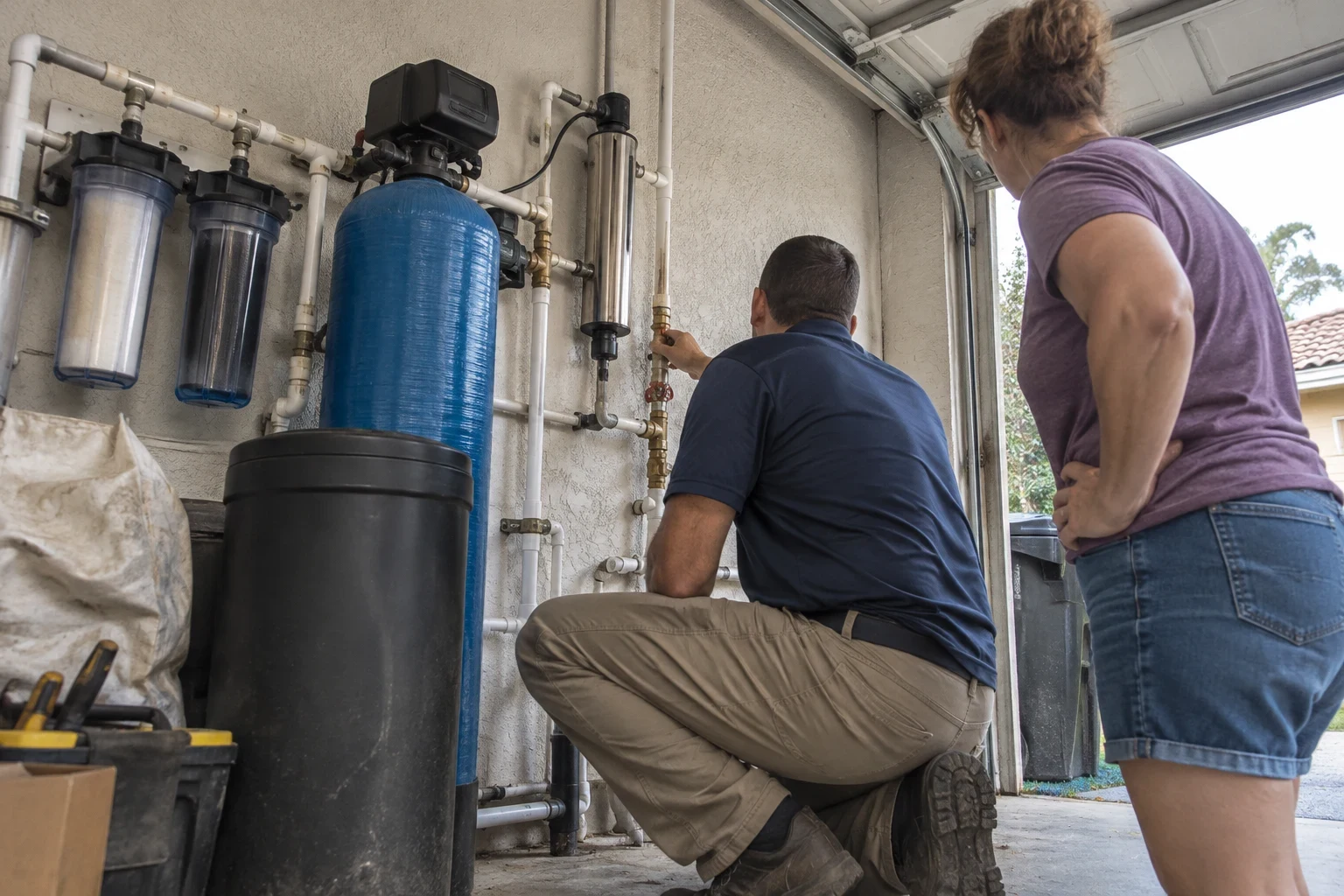
A fiberglass-reinforced mineral tank filled with catalytic carbon, sized for the contact time chloramine needs at your peak flow. We choose a backwashing or upflow design depending on whether there's a drain near the install spot.
Sediment prefilter
Upstream of the carbon, a cartridge housing traps sand, rust flakes and loose scale before they can plug the carbon bed or carve channels through it. The cartridges are a common size and change out by hand.
Bypass and shutoff valves
A three-valve bypass routes water around the system for service without shutting off the whole house. We show everyone in your home where it is and how to turn it.
Point-of-entry placement
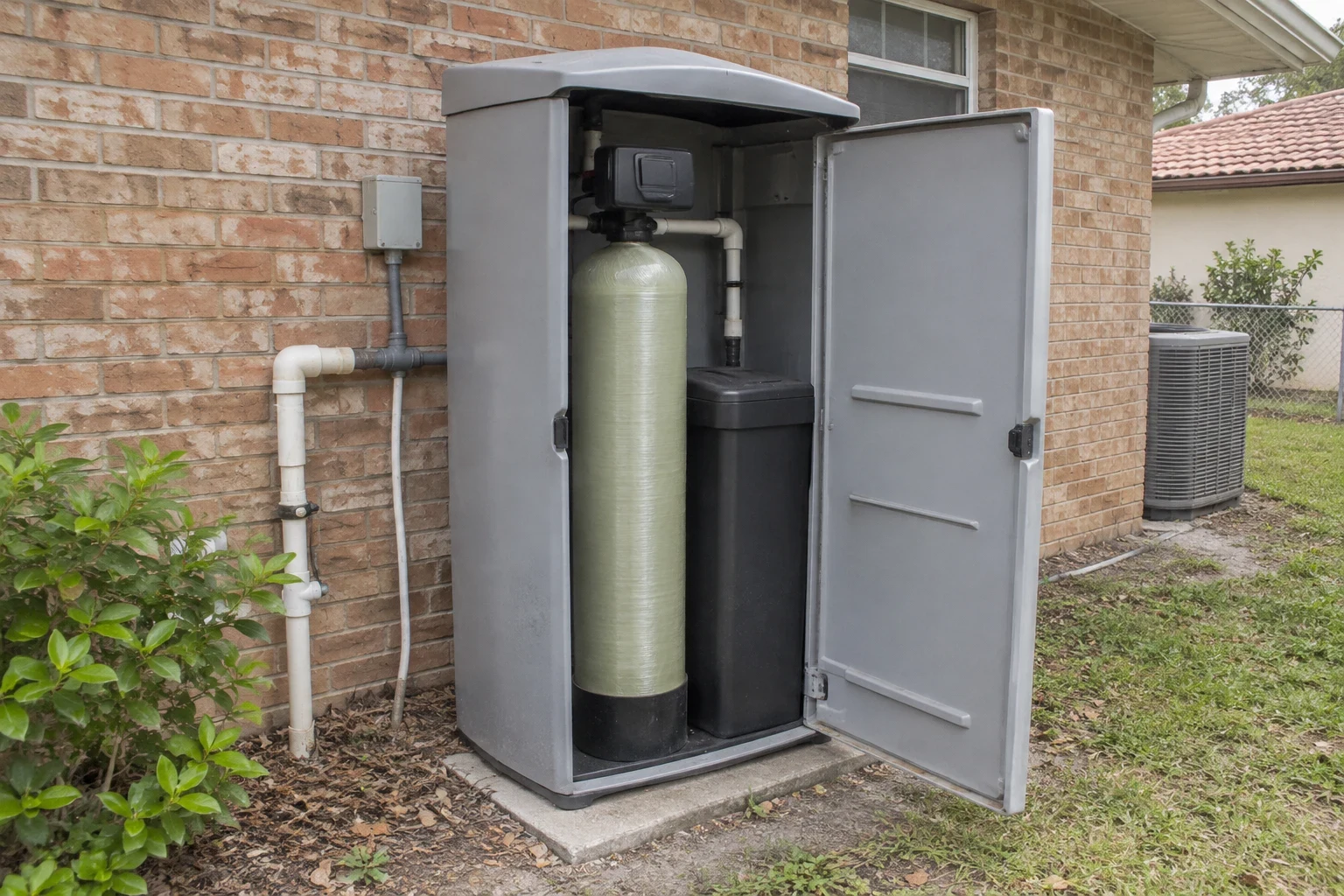
The system goes on the main line after the meter and ahead of the water heater, so hot water is treated too. In many Florida homes the main comes in near the garage or an outside wall, and we match new pipe to what's already there, whether copper, CPVC or PEX.
Floor and yard protection
Before any equipment comes inside, we cover the walking path between your entry and the install spot. At an exterior line, pipe, fittings and tools sit on a tarp rather than in your beds or on the turf. The work area gets swept and wiped clean before we leave.
Signs your water needs chlorine or chloramine removal
- Pool smell after a hot shower
- Heat drives the disinfectant out of the water and into the steam, so a closed bathroom concentrates the odor. If it's stronger there than at the kitchen faucet, that's why.
- Coffee and tea taste flat or sharp
- Chlorine compounds react with the oils and aromatics in brewed drinks. Many people first notice the problem in their morning cup.
- Toilet flappers and hose washers wear out early
- Chloramine is known to break down some natural rubber parts faster than chlorine does. Flappers that go soft or warped every year or two can be a clue.
- Your carbon filter isn't helping
- A standard carbon unit that removed the smell for a while and then stopped, or never did much, may be the wrong media for chloramine or simply exhausted.
- You keep fish or a pond
- Chloramine is toxic to fish and doesn't gas off when water sits, so aquarium and pond keepers need it removed or chemically neutralized at every water change.
How install day runs
- 1
Phone conversation first
On the call we ask about bathrooms, household size, where your main line enters and what you've noticed. That lets us size the system and tell you what the work involves before anyone arrives.
- 2
Walkthrough and protection
We confirm the install location with you, point out where the bypass and any drain line will go, and lay floor protection before carrying anything inside.
- 3
Water off, system in
We shut the main, cut in the prefilter, tank and bypass, and connect a drain line if the tank backwashes. Expect the water to be off for part of the visit, and we'll tell you before it goes off and when it's back.
- 4
Flush and check
New carbon releases fine dust, so we rinse the bed to drain until the water runs clear, then check every joint for leaks under full pressure.
- 5
Handoff
We show you the bypass, the prefilter housing and when the cartridge and carbon will need attention, then clean up and haul away packaging.
What moves the price
We don't quote a number until we know your home's plumbing and which disinfectant your utility uses. Here is what changes the cost, so you can see where the money goes when you get your quote by phone.
- Chloramine versus free chlorine
- Catalytic carbon costs more than standard carbon, and chloramine needs more of it for the same flow. A home on chloramine generally needs a larger tank.
- Household flow rate
- More bathrooms and simultaneous showers mean a wider tank and more media to keep contact time and pressure up.
- Location and pipe access
- An easy garage install costs less than one that needs a longer pipe run, an exterior enclosure, or work around finished walls.
- Drain availability
- Backwashing tanks need a drain nearby. If there isn't one, an upflow non-backwashing design or added drain line changes the parts list.
Chlorine and chloramine questions
- Will a whole-home system really remove chloramine?
- Yes, when it's designed for chloramine. That means catalytic carbon instead of standard carbon, plus enough media that water spends adequate time in contact with it at your highest flow. Systems sized only for plain chlorine often come up short on chloramine, and that mismatch is the most common reason people tell us an older filter quit working.
- Is it safe to remove the disinfectant at the main line?
- The disinfectant protects water on its long trip through the utility's mains. Once water is inside your home, the run to each tap is short and turns over daily with normal use. If a guest bath or seldom-used fixture sits for weeks, let it run for a minute before using that water.
- How long does the carbon last, and what upkeep is there?
- The sediment prefilter cartridge gets changed on a regular schedule, and the carbon bed lasts years depending on how much water you use and how much disinfectant is in it. We write down the expected intervals for you at handoff. We also offer ongoing customer support for maintenance, filter replacements, and service needs, which means the same company that installed the system handles it later.
- Does this replace a reverse osmosis system for drinking water?
- No. Carbon treats chlorine, chloramine, taste and odor for the whole house. Reverse osmosis is an under-sink system for drinking and cooking water that removes a broader range of dissolved substances. Some homes use both, and our Reverse Osmosis page explains how they work together.
- What warranty comes with the installation?
- Our installation work is covered by a 1-year installation workmanship warranty. If a fitting or connection we made gives you trouble during that first year, call us and we'll come back to correct it.
Get the bleach smell out of every tap
Give us a rough count of your bathrooms and tell us where the water main enters the house, and we'll walk you through the carbon setup that fits and what install day looks like. Floors stay covered, and you'll hear from us before each step.