ServicesWhole-Home Filtration
Whole-Home Filtration in Pinellas Park
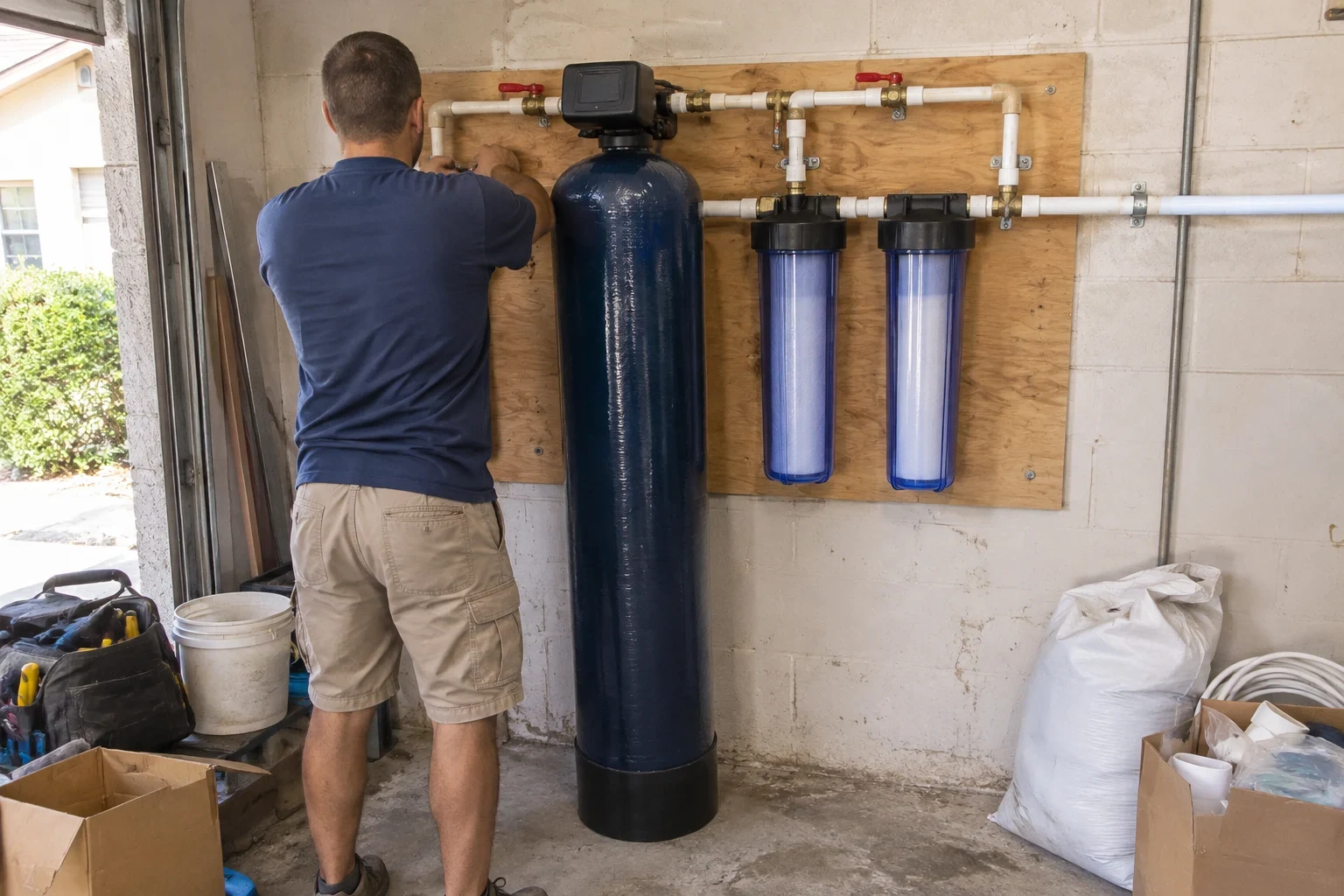
We install a carbon filtration system where your water line enters the house, so every faucet, shower and appliance gets treated water. We size the tank and media to your plumbing, protect your floors and plants while we work, and explain each step before we cut a pipe.
How point-of-entry carbon filtration works
A whole-home system handles your water once, right after it comes in from the street. We tie it into the main line after the shutoff valve and before the water heater, so hot and cold lines both carry filtered water to every faucet and appliance. Most setups pair a sediment prefilter with a tall fiberglass tank of activated carbon. As water moves slowly through that bed, chlorine and many of the compounds behind off tastes and smells bond to the carbon surface.
The grade of carbon matters. Standard granular carbon handles free chlorine well. Chloramine, chlorine combined with ammonia so it lasts longer in city mains, holds up against that media and needs catalytic carbon in a tank large enough to give it time to react. Our chlorine and chloramine removal page covers that decision in more detail.
Whole-home filtration is the right call when the problem shows up all over the house: a chlorine smell in the shower, in the laundry and at the kitchen tap. It does not soften hard water. Homeowners who want drinking water treated further often add reverse osmosis under the kitchen sink.
What the installation includes
Sizing to your flow
We note your main line diameter, usually 3/4 inch or 1 inch, and count bathrooms and fixtures. The tank is chosen so water passes through the carbon slowly enough to be treated without a pressure drop you would feel in the shower.
Sediment prefilter
A cartridge housing ahead of the tank catches sand and loose flakes of pipe scale. Stopping that debris first keeps the carbon bed from packing up and protects the control valve.
Bypass and shutoff valves
We build a bypass loop with ball valves. You can isolate the filter for service while the rest of the house keeps running water.
Proper pipe connections
We connect to copper, CPVC or PEX with fittings rated for that pipe. If the copper section we cut also serves as an electrical ground path, a bonding jumper goes across the gap.
Drain and outdoor protection
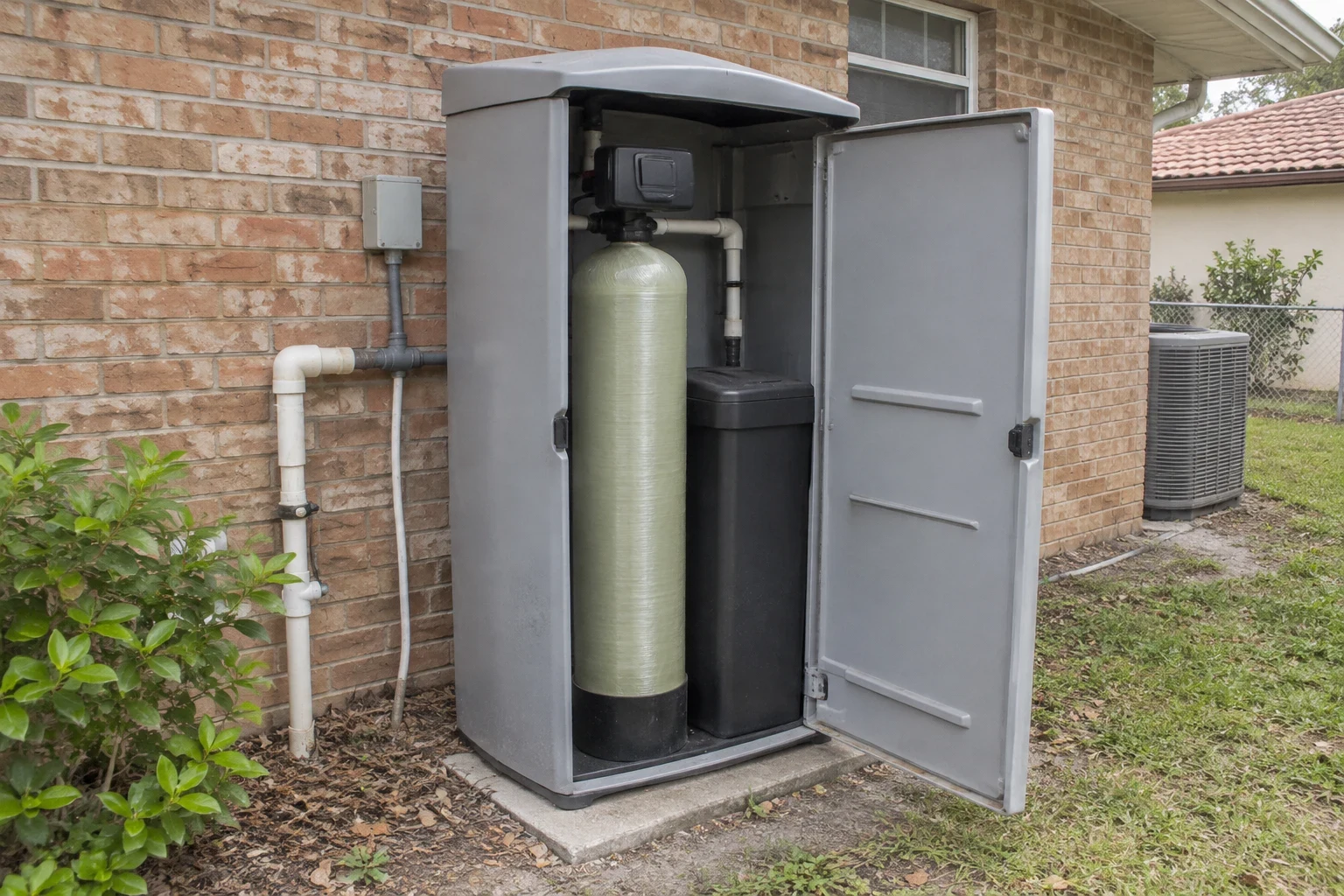
Backwashing tanks get a drain line with an air gap. In many homes around here the main comes up outside, so for exterior installs we add a cover that keeps the Florida sun off the tank and valve.
Cleanup and a walkthrough
Fresh carbon sheds a fine black powder at first, so we flush the tank until the water at the tap is clear. Then we check each joint under pressure, clean up the work area and show you the bypass and the prefilter housing.
Signs your home could use whole-house filtration
- Pool smell in the shower
- A chlorine odor that gets stronger with hot water means the disinfectant is coming through every tap, not just the kitchen.
- Coffee and ice taste off
- If drinks taste flat or chemical even from the fridge dispenser, the small filter inside is likely working past its capacity.
- Grit in aerators
- Sand or flakes in faucet screens and showerheads point to sediment that a prefilter would stop before it reaches fixtures and appliances.
- Fridge filters clogging fast
- When a refrigerator cartridge loses flow well before its rated life, it is doing work a point-of-entry system should handle.
- An old system nobody services
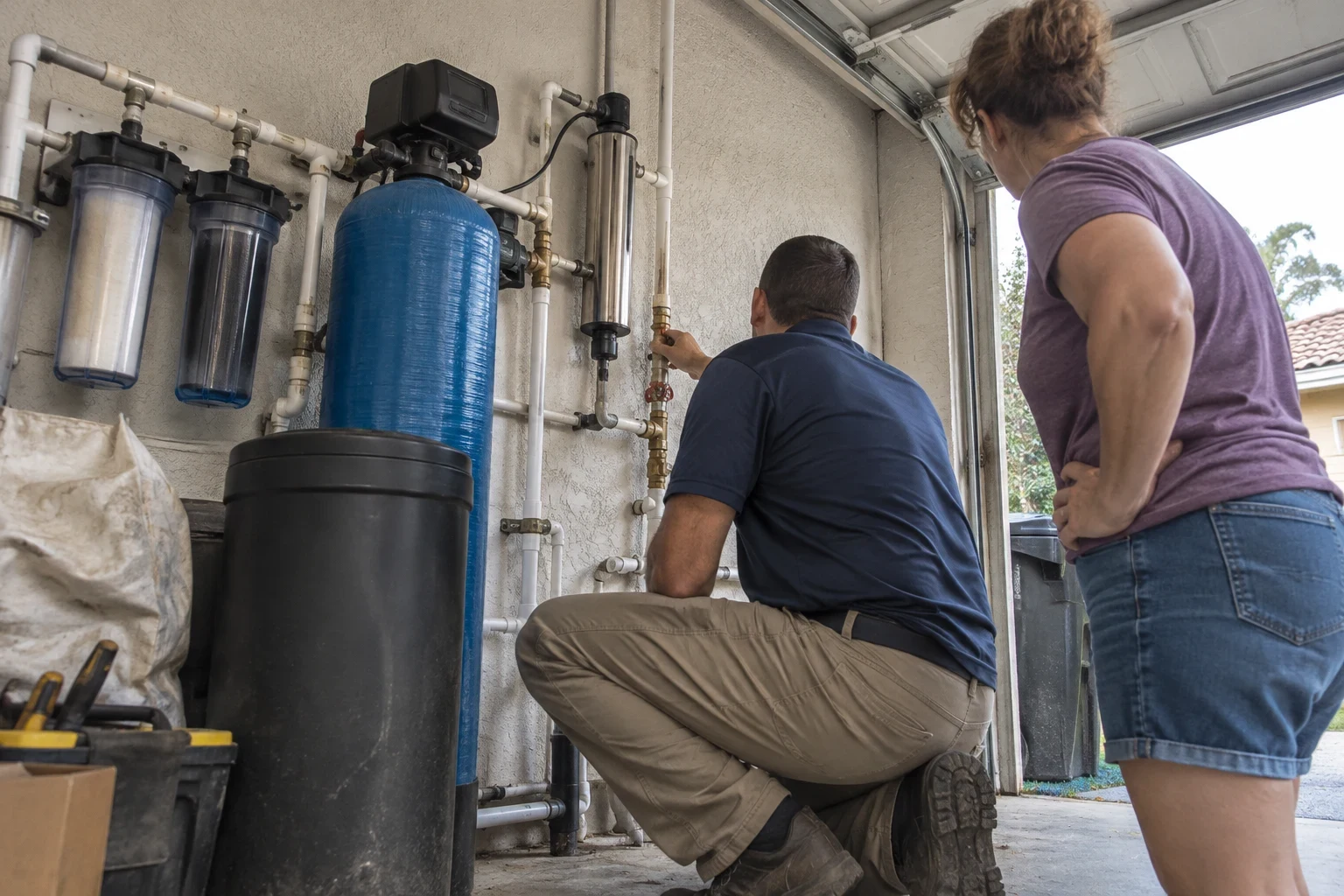
- If the tank in your garage came with the house and no one knows when the media was last changed, it may be passing water straight through. Our water softener and filtration system replacement page explains the options.
How the work goes on install day
- 1
A phone conversation first
We ask what you notice at the taps, where the main shutoff sits, what your pipes are made of, and whether hose bibs and irrigation should stay on unfiltered water. Those answers set the system design before we show up.
- 2
Protect the area
Drop cloths go down along the path we walk through the house, with pads under the spot where the tank will stand. Outdoors, tools and fittings stay off your beds and lawn, and we let you know before we turn the water off.
- 3
Plumb and connect
We close the main, cut in the bypass and the tank, add a bonding jumper where one is needed, and run the drain line. The water is normally off for only part of the visit.
- 4
Flush, check, explain
The carbon is backwashed or flushed until the water runs clear, and every joint is inspected under pressure. Before we leave, we show you how to switch the bypass and how to tell when the prefilter cartridge is ready to swap.
What moves the price of a whole-home system
We quote by phone once we know your plumbing and what you want the system to remove. Two things drive most of the number: how big the system needs to be, and how much work it takes to tie it into your main line cleanly. Every line on the quote is explained so nothing new appears on install day.
- Tank size and flow rate
- A home with three or four bathrooms on a 1 inch main needs a taller tank holding more media than a two-bath home on 3/4 inch pipe. The extra media costs more, but it is what keeps shower pressure steady when several fixtures run at once.
- Which carbon goes in the tank
- Standard granular carbon is the less expensive media. Catalytic carbon, which is needed to break down chloramine, carries a higher price, so we only put it in when your water actually requires it.
- Location and pipe condition
- Tying in near the main shutoff in a garage is straightforward. Rerouting a line, or replacing corroded fittings before we can connect, adds time and parts.
- Backwashing or not
- A backwashing control valve needs a drain line and a place for that water to go. An upflow tank that never backwashes skips the drain, though it works well across fewer water conditions.
Whole-home filtration questions
- Will a whole-house filter lower my water pressure?
- When the tank matches your plumbing, you should not notice any change at the shower. Real pressure loss nearly always comes from a tank too small for the home or a prefilter cartridge choked with sediment. We size the tank to your main line and fixture count, and we show you how to spot a cartridge that is due.
- Does it remove chloramine as well as chlorine?
- Yes, provided the tank holds catalytic carbon and has enough volume for the water to stay in contact with it long enough. Ordinary carbon handles free chlorine easily but does little against chloramine. We choose the media based on the disinfectant your utility uses and what you are noticing at the tap.
- Will it soften my water?
- No. Carbon does not remove calcium and magnesium, the minerals behind hardness and scale. If spots and buildup are your main complaint, our water softeners page explains how a softener works and how it can be installed alongside a carbon tank.
- How often does the carbon need replacing?
- It depends on your household's water use and the media in the tank, so we set an interval for your system rather than quoting a generic number. The prefilter cartridge is changed more often than the carbon. After the install, we offer ongoing customer support for maintenance, filter replacements, and service needs, which means one phone call covers either job when it comes due.
- Is the installation covered?
- Yes. A whole-home system we install carries a 1-year installation workmanship warranty. It applies to the work we did, such as the joints, fittings and connections we made on your line.
Ready for treated water at every tap?
Tell us your pipe type, where the main shutoff is and what you are noticing in the shower and at the sink. We will explain the system that fits and what install day looks like.