ServicesSoftener Repair & Maintenance
Water Softener Repair & Maintenance in Pinellas Park
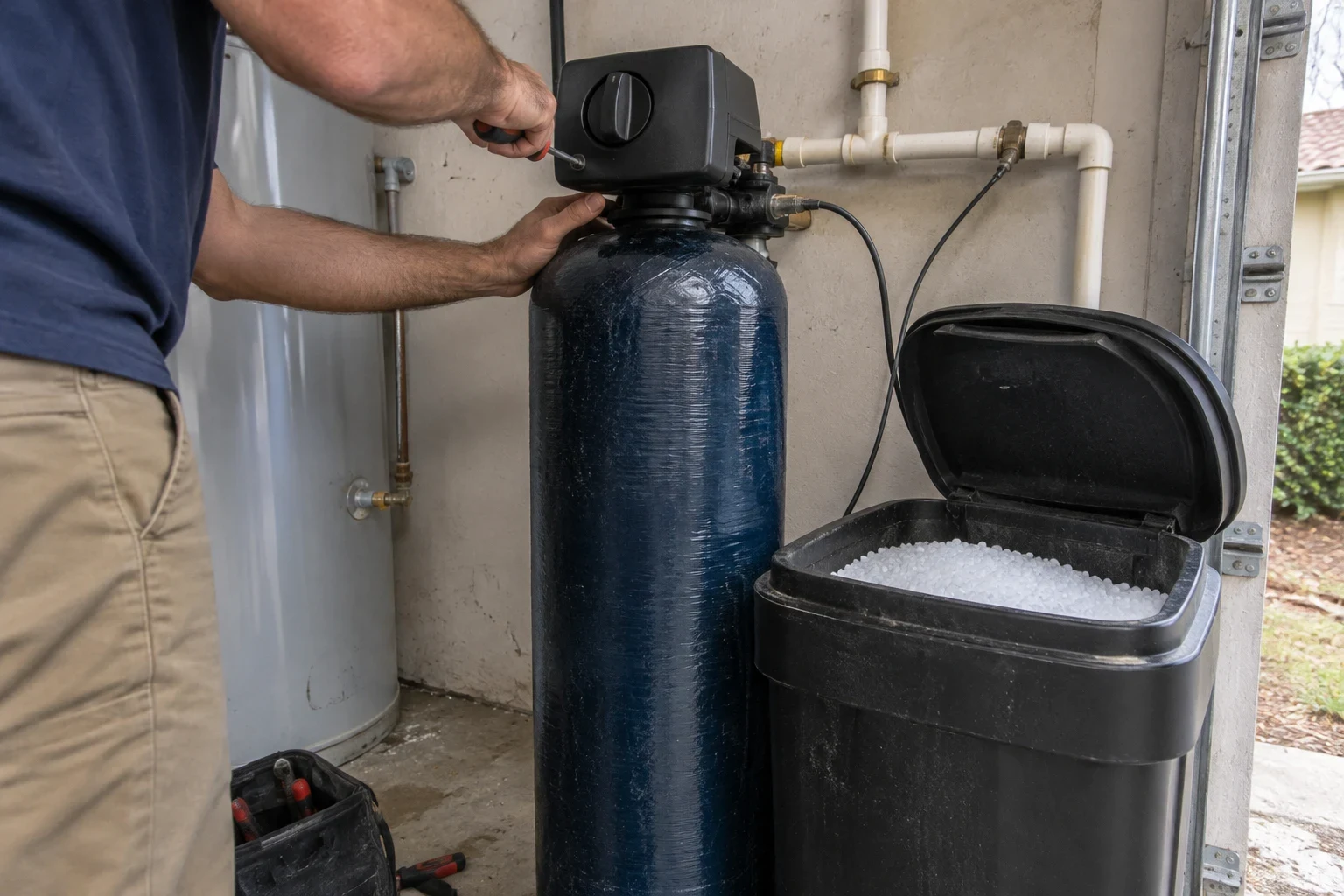
When your softener stops regenerating, burns through salt, or leaves the water feeling hard again, we track down the failed part and fix it. We protect the floor around the unit, and we tell you what we found before anything gets replaced.
What a softener repair actually involves
A water softener is a fairly simple machine with a few parts that wear. These are a control valve with a piston and rubber seals, an injector that pulls brine from the salt tank, a resin bed that does the softening, and a brine tank with a float valve. When hard water comes back, one of those parts has usually stopped doing its job. Our work is to find which one, and why it failed.
Most repairs come down to cleaning, a seal kit, a new injector or reprogramming, not a new system. When the resin is spent or a valve body is cracked, we say so plainly and lay out replacement as an option. That work is covered on our water softener & filtration system replacement page.
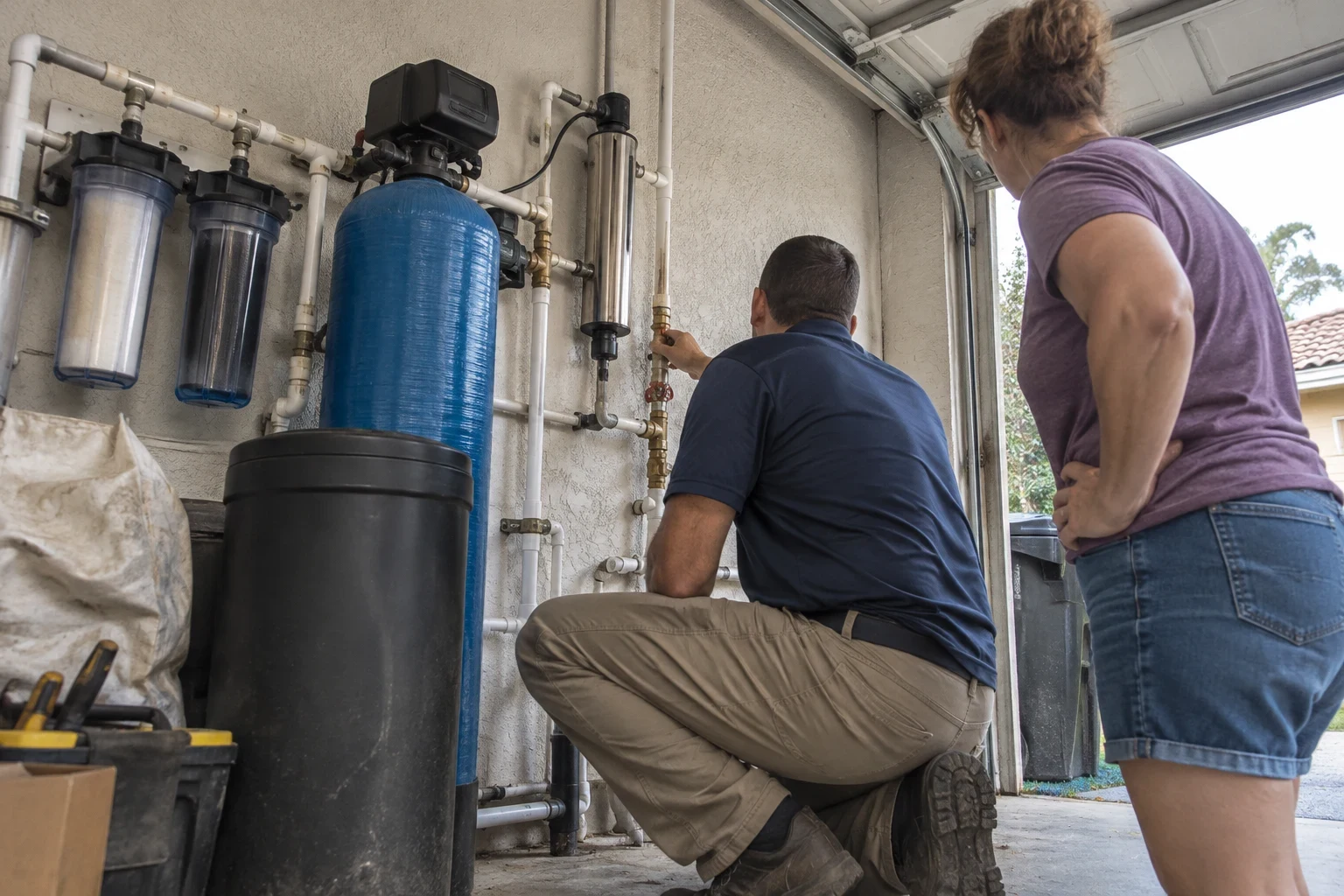
Softeners usually sit in a garage, utility closet or laundry room, right next to finished floors. We lay down drop cloths and keep towels under every connection we open. We also drain the brine tank into buckets instead of across your floor.
What a repair or maintenance visit covers
- 01
Control valve diagnosis
We step the valve through each regeneration stage by hand: backwash, brine draw, rinse and refill. Watching each stage shows whether the piston, the seals or the drive motor is at fault.
- 02
Injector and screen cleaning
The injector is a small venturi with a very narrow opening. Sediment and salt residue clog it, and the softener stops drawing brine. We pull it, clean or replace it, and confirm the draw before moving on.
- 03
Brine tank cleanout
We break up salt bridges and scoop out mushed salt, the sludge that settles at the bottom. Then we check the float assembly and brine line so the tank refills to the right level.
- 04
Resin bed check
Resin fouled by iron or broken down by chlorine loses capacity. We tell you whether a resin cleaner, a full rebed or nothing at all is the right call.
- 05
Settings and bypass valve
We reset the clock or meter, set regeneration to match how much water your household uses, and make sure the bypass valve seals fully in both positions.
Questions about Softener Repair & Maintenance?
Call(727) 649-8906Signs your softener needs service
Hard water is back
Spots on glasses, scale on faucets and soap that won't lather mean the resin isn't being recharged. That is usually a brine draw problem, not a dead softener.
Salt sits at the same height for weeks
Pellets that never go down tell you the valve isn't pulling brine out of the tank. Most often a hard crust has formed over hollow space, or the narrow opening in the injector is plugged with residue.
Water rising in the brine tank
A stuck float or a leaking piston seal can let water keep filling the tank. Left alone, it can overflow onto the floor.
Constant draining
A softener that sends water to the drain for hours, or regenerates in the middle of the day, often has a worn seal set or a failing timer.
Blinking display after a storm
Summer storms and power outages reset older timer-based units. A flashing clock can mean the softener is regenerating at the wrong time or skipping it entirely.
How a service visit runs
- 1
We talk it through by phone
Tell us the brand and model if you can read the label, what you've noticed and where the unit sits. That helps us bring the likely parts on the first trip.
- 2
Floor protection and shutoff
Drop cloths go down first. We put the softener in bypass and relieve pressure before opening anything, so your taps keep running for most of the visit.
- 3
Diagnose, then explain
We cycle the valve and inspect the injector, brine tank and resin, then show you the worn part. You hear what the repair involves and what it costs before we start.
- 4
Repair, test and clean up
We run a full regeneration, check every fitting for drips and wipe down the unit. Old parts and wet salt sludge leave with us.
What moves the price of a softener repair
We can't price a repair until we know which part failed, and we won't guess over the phone. What we can do is explain what drives the number. You'll hear the figure before any work begins.
- Which part failed
- Clearing a clogged injector or a salt bridge is mostly labor. A seal and spacer kit, a drive motor or a circuit board adds parts cost.
- Make and age of the valve
- Parts for common control valves are easy to get. Discontinued valves can need hard-to-find parts, and sometimes that tips the decision toward replacement.
- Resin condition
- Cleaning fouled resin is a small job. Replacing the whole resin bed takes more material and more time.
- Access to the unit
- A softener wedged into a closet or behind a water heater takes longer to open up and service without risking a mess.
Softener repair questions
How often should a water softener be serviced?
Most units do well with a yearly check of the injector, brine tank and settings. Homes on well water or with iron may need it more often, because iron coats the resin. In humid weather, look into the brine tank every month or two for a hard salt crust.
Is it worth repairing an older softener?
Often, yes. The tanks last a long time, and the parts that fail are usually seals and the injector. If the valve is obsolete, or both the resin and valve need work, we put the repair cost next to replacement so you can compare.
Do you work on softeners someone else installed?
Yes. Most residential softeners use one of a handful of control valve designs. Give us the brand and model when you call, and we'll tell you up front if parts could be a problem.
What kind of salt should I use?
Use clean, high-purity pellets or crystals. Rock salt carries insoluble material that settles into sludge and clogs the injector. If your water has iron, a salt with a rust-removing additive helps keep the resin cleaner.
Is the work covered by a warranty?
Systems we install come with a 1-year installation workmanship warranty. If a repair visit turns into a replacement, that coverage applies to the new installation. We'll be clear about which work falls under it.
Who do I call when the softener needs attention again?
Call the same number. Our support doesn't end when the visit does: we stay available for routine maintenance, replacement filters and any later service the unit needs. That way, when a crust forms in the brine tank or a prefilter cartridge is due, you're talking to people who already know your setup.
Get your softener working again
Tell us what the softener is doing and where it sits in your home. We'll talk through the likely causes and set a time to come out, with drop cloths down before the first tool.