ServicesSystem Replacement
Water Softener & Filtration System Replacement in Pinellas Park
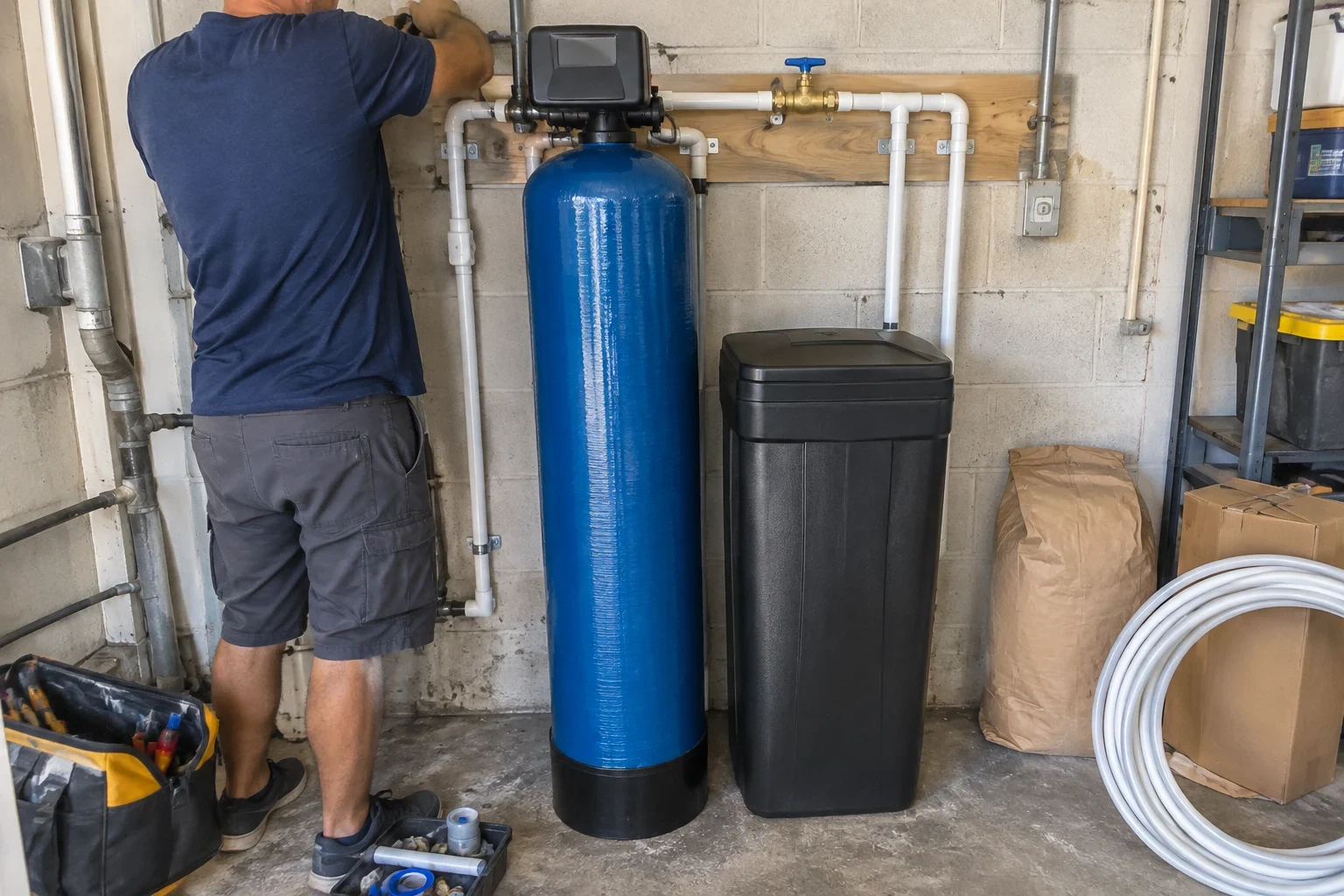
When a softener or whole-home filter is past repair, we take out the old tanks and valve, install a properly sized replacement, and explain each step before we start. Floors get covered, the work area gets cleaned, and you know what is going in.
When replacing makes more sense than repairing
Most softeners and filters wear out slowly. A control valve starts sticking mid-regeneration, the resin breaks down into fine particles, or a carbon tank stops catching the chlorine taste it used to remove. Many of those problems can be fixed, and our Water Softener Repair & Maintenance service handles them. Replacement is the better call when the fiberglass tank is cracked, the valve head is discontinued with no parts available, or the media is spent on a system old enough that new resin in an old valve is money poorly spent.
We give you that answer plainly. If a repair will carry the unit another few years, we say so. If it won't, we show you why: the worn piston, the leaking tank seam, the resin beads in your aerator.
A replacement can be a straight swap of a softener, a whole-home carbon filter, or both, set in the same spot or moved with your okay. Before any pipe is cut, you will know where the new bypass valve, drain line and brine tank will sit.
What a replacement job covers
Removing the old system
We close the supply, set the old unit to bypass, drain both tanks and disconnect them. Brine tanks often hold heavy, wet salt, so we empty them where they sit instead of dragging them across your floor.
Sizing the new equipment
Softener size comes down to grain capacity, and that number is driven by your household's size and its daily water use. A carbon filter is sized by flow rate so pressure holds up when two showers and the washer run at once.
New bypass and connections
We fit a new bypass valve and fresh fittings rather than reusing corroded ones. Connections are matched to your existing copper, CPVC or PEX lines.
Drain line and air gap
The backwash drain gets a proper air gap so wastewater can't siphon back into the system. The brine tank overflow is piped to drain as well, so a stuck float doesn't flood the floor.
Protection inside and out
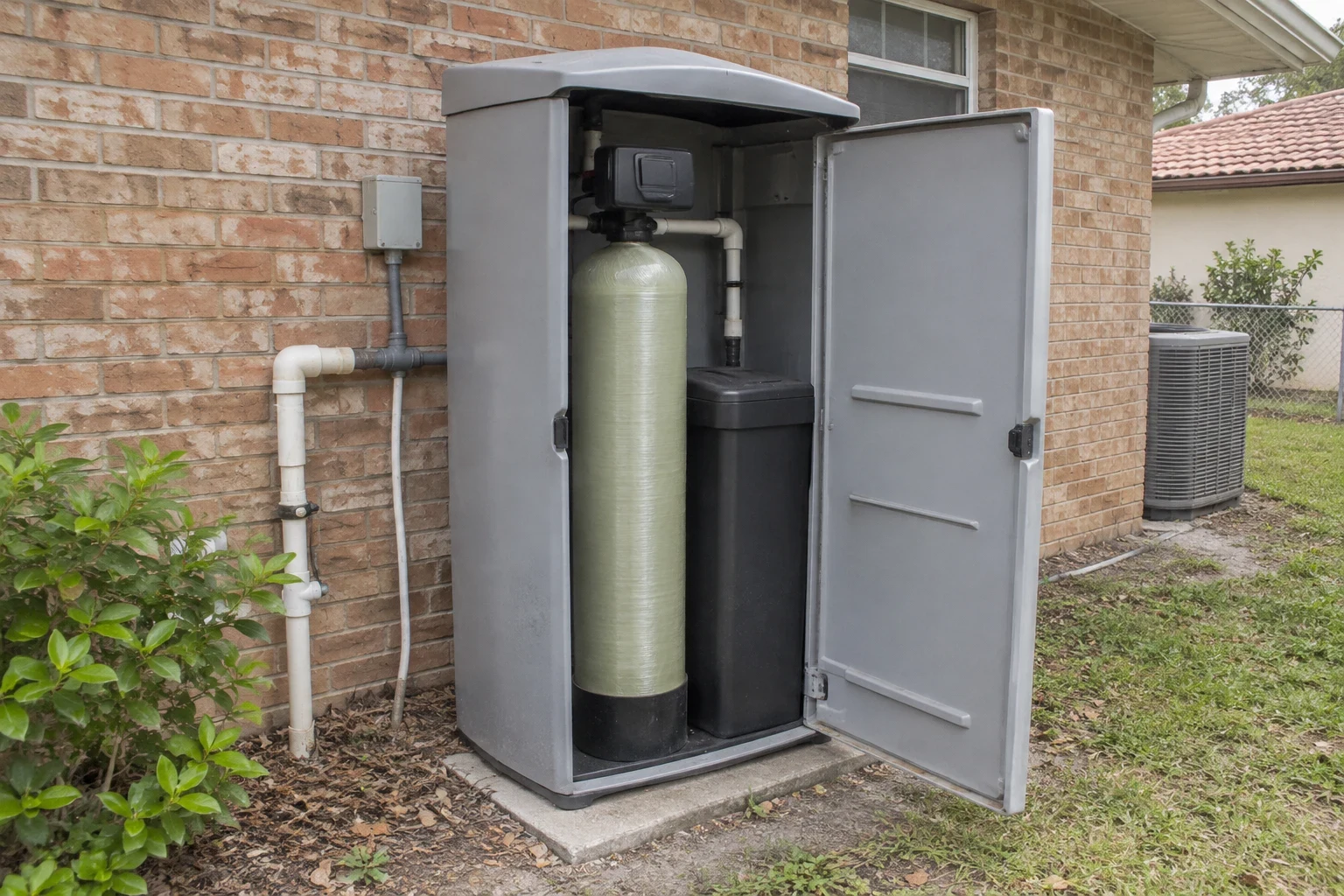
Drop cloths and runners cover the route from the door to the equipment. When a system sits on an outdoor pad beside the house, as many do in Florida, we keep hoses and old tanks off your plant beds.
Startup and walkthrough
Once the brine tank has water and salt, we set the regeneration schedule and force a manual cycle while we look over each fitting for leaks. Before we leave, you get a hands-on lesson in using the bypass and a short list of things worth watching.
Signs your system is due for replacement
Salt sits untouched for weeks
If the salt level in the brine tank never seems to drop from one month to the next, the valve is no longer drawing brine. On an older unit, a plugged injector is often only the first of several worn parts.
Spots and scale are back
Water spots on glass and crust on fixtures despite plenty of salt usually mean the resin is exhausted or fouled. Chlorine and chloramine slowly break resin down, so older beds lose capacity even with good care.
Resin beads in faucets
Small amber beads in aerators or toilet tanks point to a broken distributor or riser tube inside the mineral tank. By that stage the tank internals have usually failed.
Chlorine taste has returned
A whole-home carbon filter that no longer removes the bleach smell has spent media. If the tank and valve are aging too, a full replacement is often the cleaner fix.
Leaks or weeping seams
Moisture around the valve body or a damp spot under the mineral tank can mean a cracked tank or failed O-rings. A cracked tank can't be repaired.
How the replacement goes
- 1
A conversation by phone
You tell us what you have and what has changed. Reading us the model label on the valve head helps us judge the age and parts situation before we arrive.
- 2
On-site look and written plan
We check the old unit, the plumbing around it, the drain and the electrical outlet. You get a straight repair-or-replace answer, plus an itemized estimate in writing, and nothing goes on the calendar until you have it.
- 3
The replacement visit
Floors get covered first, then we close the supply and let you know how long the water will be off. The old system comes out, the new one goes in, and we flush the media to clear fines and trapped air.
- 4
Startup, cleanup and support
We run a regeneration, look for leaks, sweep up and haul away the old tanks. The installation carries a 1-year installation workmanship warranty, and after we leave you can keep calling us for maintenance, filter replacements and any other service the system needs.
What affects the cost of a replacement
Every replacement is priced from what we find at your home, so you get a written estimate after the on-site look. These are the things that move the number most.
- Type and size of system
- A single softener costs less than a softener paired with a carbon filter. Larger grain capacity and higher flow ratings mean larger tanks and more media.
- Condition of existing plumbing
- Corroded copper stubs or brittle old fittings around the old unit need replacing before new equipment goes on.
- Location and relocation
- A same-spot swap is simplest. Moving the system means new pipe runs and sometimes a new drain or outlet location.
- Added treatment stages
- A sediment prefilter or a carbon stage ahead of a softener adds equipment, but it can protect the resin and extend its life.
Replacement questions we hear often
Something not covered here? (727) 649-8906
Can you reuse my old brine tank or bypass valve?
A brine tank can sometimes stay if it is clean, has no cracks and lines up with the new valve's brine line. Bypass valves are usually made for one valve brand, so we normally swap them out. During the on-site look we point out which parts can stay and which can't.
How long will my water be off?
Only while we cut in and connect the new equipment, not for the whole visit. Before we close the main, we tell you roughly how long it will stay off so you can plan showers, laundry or the dishwasher around it.
Should I replace my softener with the same kind of system?
Not always. If chlorine taste bothers you more than scale does, a whole-home carbon filter or our Chlorine & Chloramine Removal setup may be the better fit. We ask what you notice at the tap and look at how the old system was plumbed before we recommend anything.
Will chloramine wear out the new resin?
Over time, chloramine can soften and swell softener resin beads. If your home's water is treated with it, a carbon stage plumbed ahead of the softener removes most of it first, which helps the resin keep its capacity longer.
What warranty comes with the work?
Our installation work is covered by a 1-year installation workmanship warranty. Coverage on the equipment itself depends on the unit you pick, and we walk through those terms with you while you are still comparing options.
What do you do to protect my floors and yard?
Runners go down along the path from your door to the equipment, with drop cloths under the work area. We drain old tanks before lifting them so nothing sloshes on the way out, and we sweep and wipe the area once the new system is running.
Retire the old unit without the mess
Tell us what your softener or filter is doing and we'll explain the options, from repair to a full replacement. We work in Pinellas Park and nearby towns like Largo, Seminole and St. Petersburg.