ServicesWater Softeners
Water Softeners in Pinellas Park
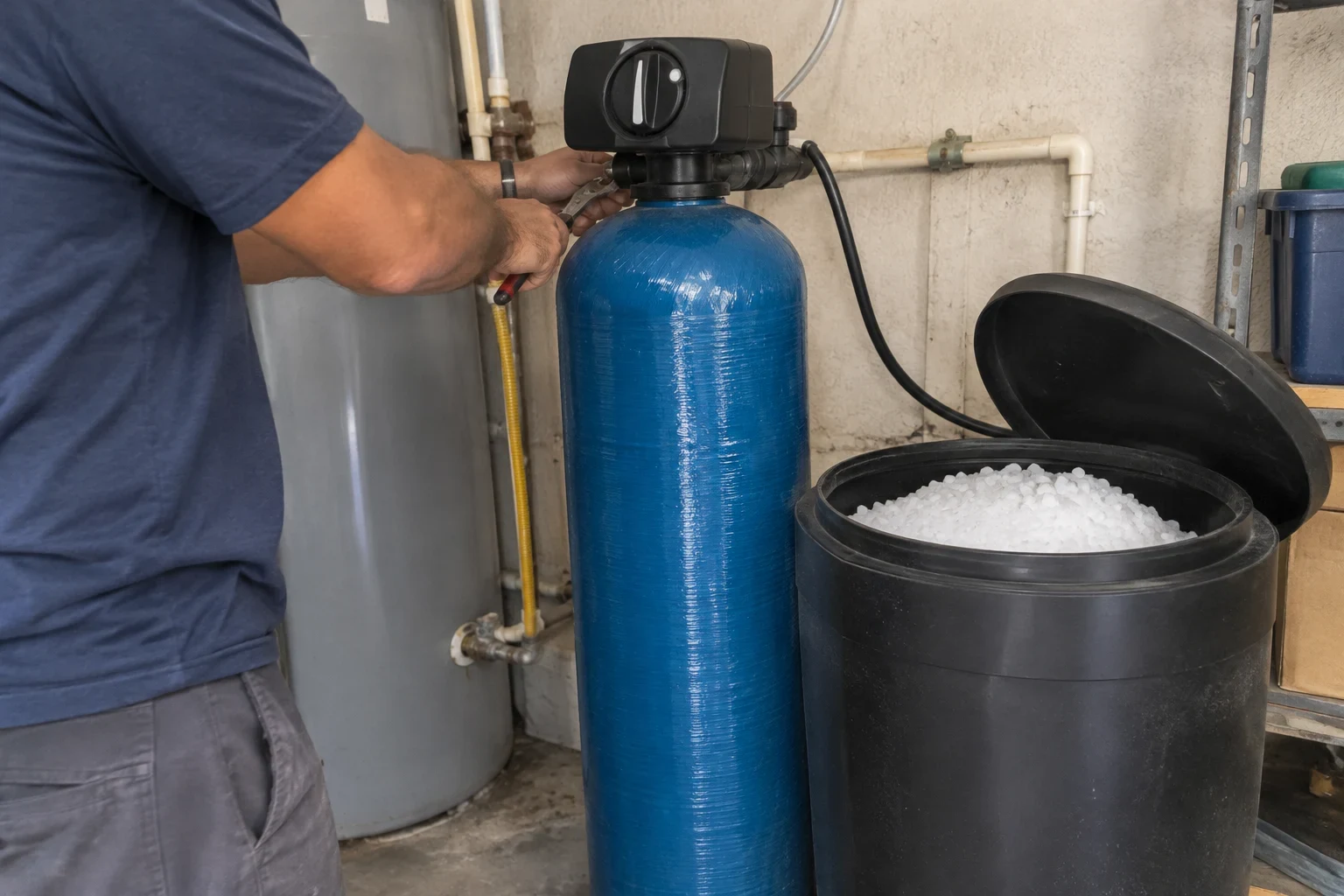
We size and install ion-exchange water softeners that stop scale before it reaches your water heater, fixtures and glassware. You hear what we plan to do before we start, your floors stay covered while we work, and the system is set for your household before we pack up.
How softening works and who it helps
Hardness is dissolved calcium and magnesium in your water. Heat or evaporation pulls those minerals out as scale, which shows up as crust on a showerhead, haze on glass shower doors and a gritty layer settling in the bottom of a tank water heater. Inside a softener, water passes over resin beads that hold onto the calcium and magnesium and release sodium or potassium in their place, so the scale has nothing to form from.
Softening solves hardness and nothing else. Chlorine taste, odor and most other contaminants pass right through the resin. If taste or smell is what bothers you, our Chlorine & Chloramine Removal or Whole-Home Filtration service will do more for you, and we will say so on the call rather than install a resin tank that misses the problem.
If scale really is the issue, we size the softener to your hardness level and your household's daily water use, not to whichever model happens to be in stock.
What the installation includes
Capacity sizing
We calculate how many grains of hardness your home needs removed each day, then choose a resin volume that regenerates every several days instead of nightly. Too large a unit sits idle long enough for water to channel through the resin bed; too small a unit regenerates constantly and goes through salt and water fast.
Metered control valve
The valve we fit has a built-in meter that tracks how much water has passed through the resin, and it starts a cleaning cycle once that capacity is nearly used up. If the house sits empty for a week, no salt or water gets spent on a cycle nobody needed. We program hardness, capacity and regeneration time with you watching.
Bypass and isolation valves
Each install includes a bypass that routes water around the softener during service, plus shutoffs so the unit can come out without draining the rest of your plumbing.
Drain line with an air gap
Brine from each regeneration discharges through an open air gap above the drain, so used water has no path back into the lines you drink from. We fasten the line in place so it stays put when the backwash surges.
Floor and yard protection
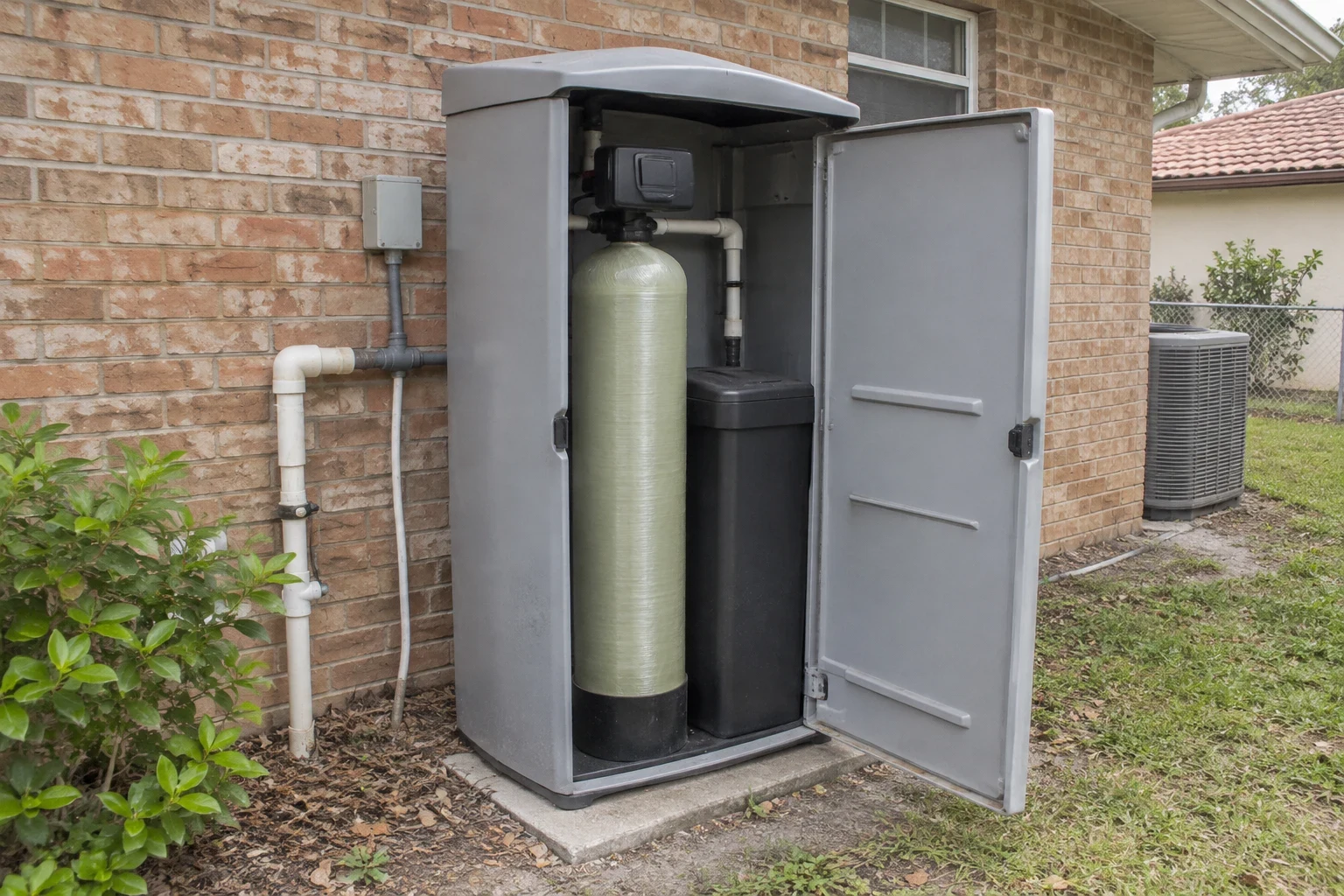
We cover the floor from your door to the install location, and for outdoor units we keep pipe scraps and fittings out of your beds and grass. Before we go, we sweep up and wipe everything down.
Signs hard water is costing you
- White crust on fixtures
- Chalky buildup around faucet aerators and showerhead holes is calcium carbonate. It returns within weeks of cleaning when the water is hard.
- Spotted dishes and glass
- Cloudy spots left after the dishwasher, even with rinse aid, usually mean minerals drying on the surface.
- Soap that will not lather
- Calcium binds with soap and forms scum instead of suds, so you use more shampoo and detergent and still see a ring in the tub.
- A noisy water heater
- Popping or rumbling from a tank heater often comes from scale on the bottom trapping water under it. That layer also slows heating and shortens the tank's life.
How the job day runs
- 1
Walkthrough and plan
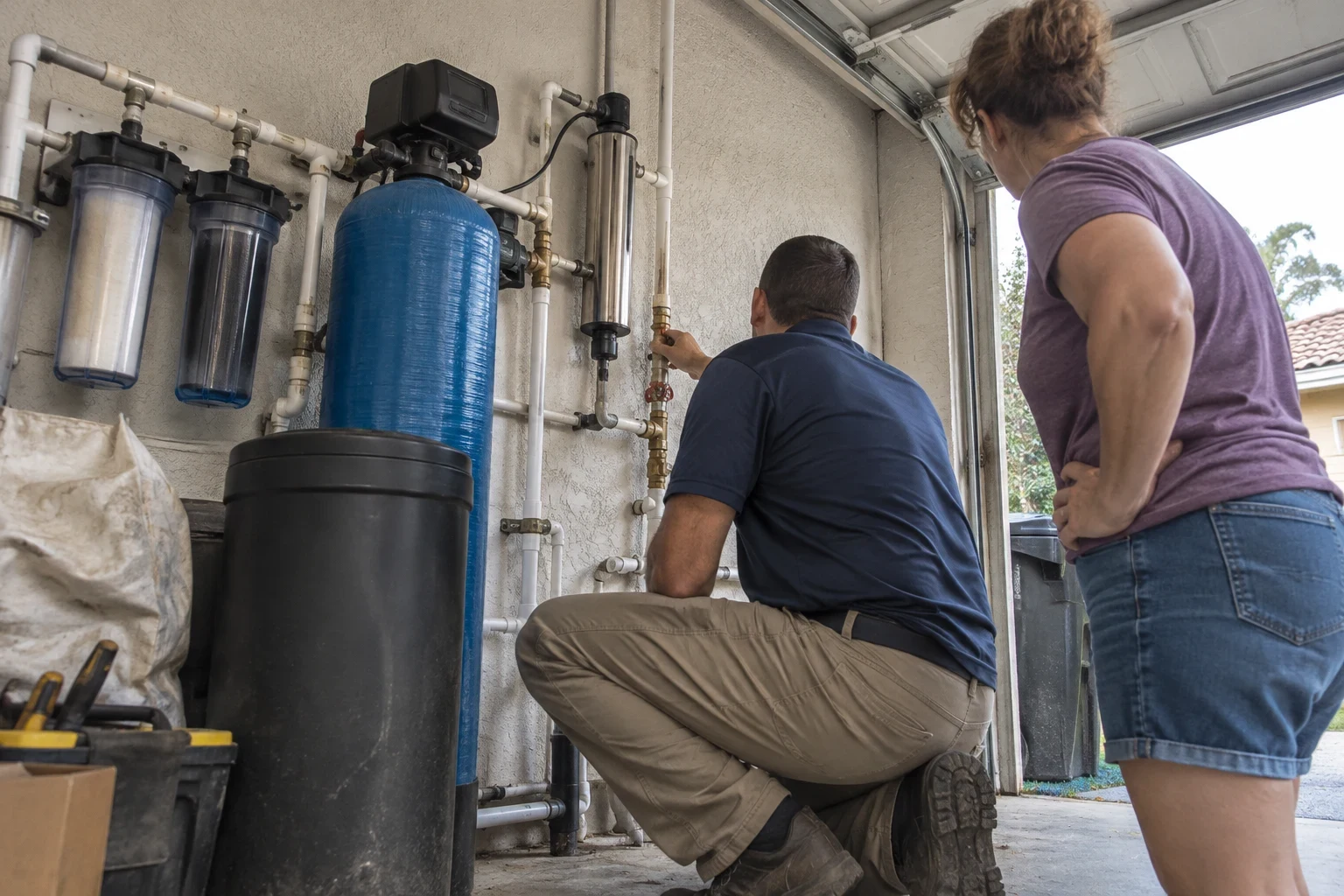
We confirm where the softener goes, where it ties into the main line and where it will drain. You hear the plan, including any wall or valve work, before a pipe is cut.
- 2
Protect and shut off
We lay down floor covering, shut off the main and drain the line. We let you know how long the water will be off so nobody is caught mid-shower.
- 3
Plumb and connect
We install the bypass and shutoffs, set the mineral and brine tanks, run the drain line with its air gap and plug in the control valve. Where your city requires a plumbing permit for the work, we pull it.
- 4
Start-up and settings
We purge air from the resin bed, run a manual regeneration, check every joint for leaks and program the valve. Then we show you the bypass, how to read the display and when to add salt.
What sets the price of a softener install
Two things drive your quote: the equipment your water and household actually call for, and the plumbing needed to put it in the right spot. We walk through each line by phone, so nothing shows up on install day that you have not already heard about.
- Resin volume and tank size
- Harder water and more people in the house mean more grains to remove each day. That calls for more resin and a larger mineral tank, which raises the equipment portion of the price.
- Timer or metered control
- A clock-timer valve is cheaper to buy. A metered valve that regenerates only after a set number of gallons carries a higher upfront price, and it pays some of that back through lower salt and water use.
- Plumbing access
- Some homes were built with a loop already stubbed out for a softener, and connecting to it takes little pipe and little time. When we have to tap the main line fresh, cut through a wall or run pipe out to the garage, the extra fittings and labor show up in the quote.
- Drain and power
- The control valve needs an outlet and the brine discharge needs a drain within reach. Adding or extending either one adds to the job.
- Removing an old unit
- Disconnecting and hauling away a failed softener takes extra time. If you are swapping out older equipment, our Water Softener & Filtration System Replacement page explains that work.
Water softener questions
- Will my water feel slippery afterward?
- A little, yes. Without calcium and magnesium in the water, nothing coats your skin while you rinse, so it feels slicker than hard water did. That sensation is clean skin, not soap you missed, and most households stop noticing within a week or two.
- Will a softener fix chlorine taste or smell?
- It will not. The resin in a softener swaps out calcium and magnesium, and it does nothing for chlorine or chloramine. Those call for carbon media, which we install through our Chlorine & Chloramine Removal and Whole-Home Filtration services, sometimes plumbed in line with a softener.
- How often will I add salt?
- That depends on your hardness, your water use and the size of the brine tank. With a metered valve programmed correctly, most households look in the brine tank about once a month and add salt when it sits below the water level. We also show you how to spot a salt bridge, the hard crust that can form in humid weather, and how to break it up.
- Is there a warranty on the installation?
- Yes. Every softener we put in comes with a 1-year installation workmanship warranty. It covers the work we did on the install, such as the plumbing and connections we made.
- Who do I call when it needs service later?
- You call us. We provide ongoing customer support for maintenance, filter replacements, and service needs, so the crew that installed your softener can keep looking after it. For valve faults, tired resin or salt bridging, our Water Softener Repair & Maintenance page has the details.
Find out what size softener your home needs
Tell us your household size and where your current plumbing comes in, and we will walk you through the right resin capacity, valve and install spot. You get your quote by phone, with each part of the price explained.