ServicesWell Water Treatment
Well Water Treatment in Pinellas Park
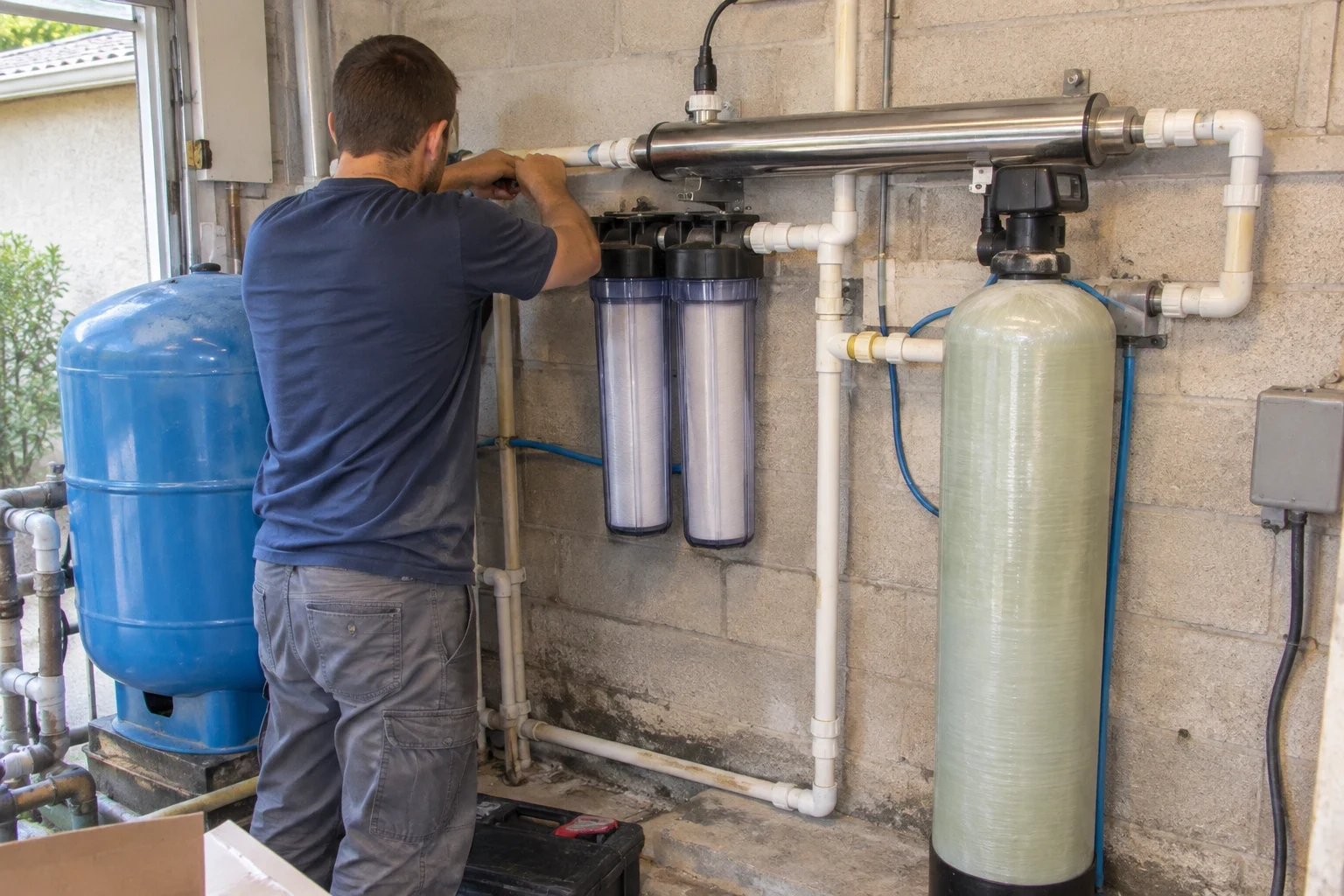
Sulfur odor, orange iron stains, grit in faucet screens and hard scale all trace back to what a private well picks up underground. We choose each treatment stage for the problem your water actually has, mount it at the point of entry, and keep floors and plantings protected throughout.
What Well Water Treatment Fixes
Well water skips the treatment plant, so whatever the ground adds stays in it. In Florida that usually means hydrogen sulfide gas, dissolved iron and sometimes manganese, sand or silt, and calcium picked up from limestone. Each one needs a different fix. Dissolved iron, for example, passes straight through a plain cartridge filter. It has to be oxidized into solid particles first, and only then can a filter bed catch it.
We build the system in stages, in the order the water needs them, and we explain why each stage is there before anything gets installed. If your home is on city water instead of a well, our whole-home filtration and chlorine and chloramine removal pages are the better fit.
What the Work Includes
- 01
Sediment prefilter
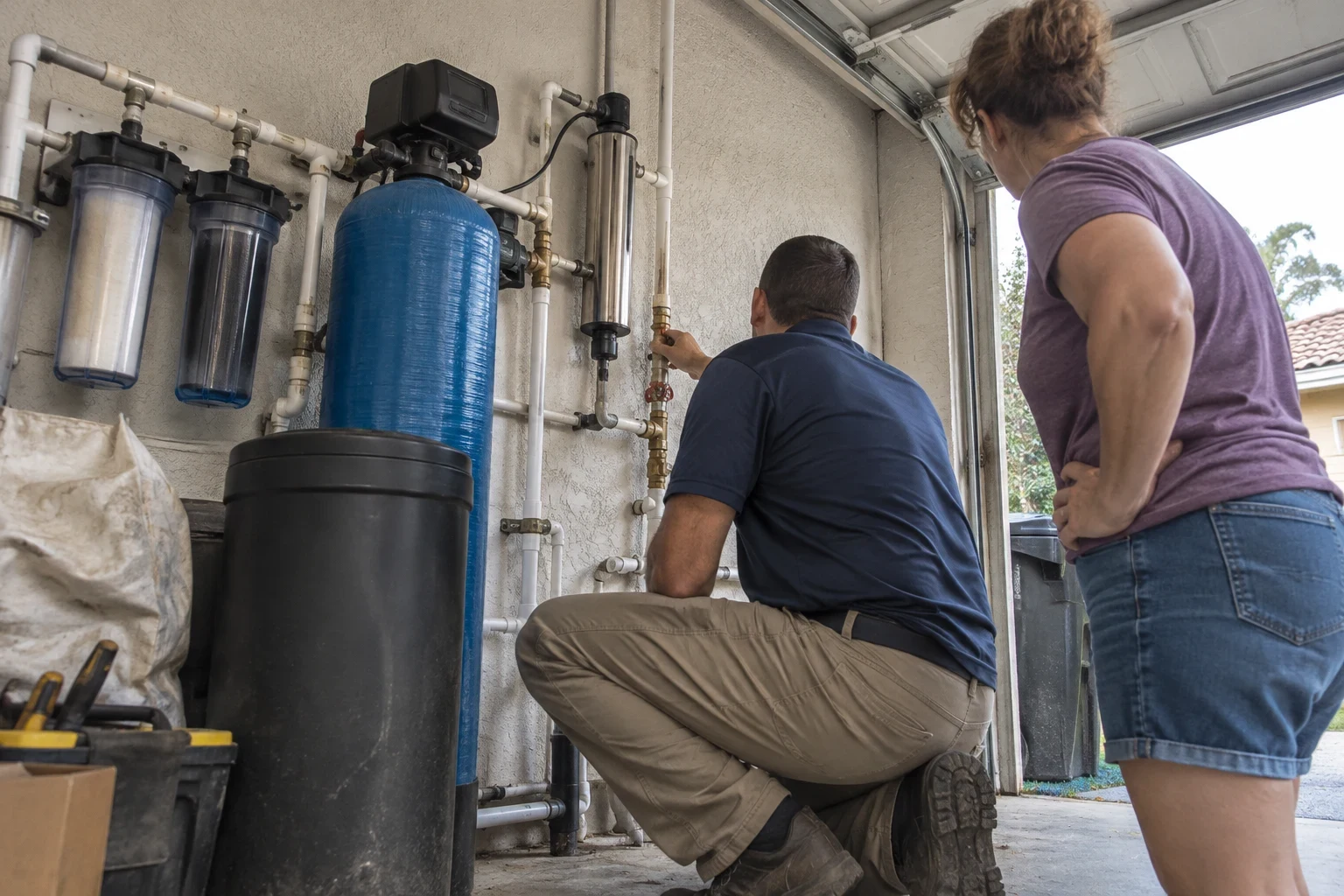
A spin-down or cartridge sediment filter goes first in line. It catches sand and silt before they can foul the media beds downstream or wear the seals in a control valve.
- 02
Oxidizing filter for iron and sulfur
For rotten-egg odor and rust staining we typically use an air-injection oxidizing filter. A pocket of air at the top of the tank converts dissolved iron and hydrogen sulfide into particles, and the media bed traps them. At a set time, the valve head reverses flow through the media and sends the captured particles out the drain line.
- 03
Softener when hardness calls for it
Limestone aquifers can leave calcium and magnesium high enough to scale water heaters and showerheads. When that is part of the problem, we add a resin softener after the iron stage. That way the resin is not coated with iron it was never meant to handle.
- 04
UV disinfection option
Some wells call for an ultraviolet sterilizer as the last stage, which treats bacteria without adding chemicals. It needs a dedicated outlet and a yearly lamp change, and we explain both up front.
- 05
Bypass, drain and plumbing
We install a bypass valve on each system, so water keeps flowing to your taps while a tank is being serviced. The backwash line runs to an approved discharge point, routed so it does not wash out mulch or flood a planting bed.
Questions about Well Water Treatment?
Call(727) 649-8906Signs Your Well Water Needs Treatment
Rotten-egg smell
That odor is hydrogen sulfide gas. When it is worse at the hot taps, sulfur in the water may be reacting with the magnesium rod inside your water heater tank, and we will point out whether that is adding to the problem.
Orange or brown stains
Reddish rings in the toilet bowl, streaks in the tub and tinted whites in the wash usually mean dissolved iron. It stays invisible in the pipe and turns to rust once it hits air at the fixture.
Black specks or gray staining
Dark residue often means manganese. It behaves like iron but needs a slightly different oxidation approach.
Clogged aerators and grit
Sand in faucet screens or a gritty feel in the tub means sediment is getting past the well screen and into your plumbing.
White crust on fixtures
Chalky scale on showerheads and glass doors is hardness. Left alone, it shortens water heater life and narrows small fittings.
How a Well Water Job Runs
- 1
Phone conversation
You describe what you see and smell, where the well and pressure tank sit, and what equipment is already there. We tell you what we expect to look at when we arrive.
- 2
Site visit and sizing
We wear boot covers indoors and check the pressure tank, pressure switch settings and the space at the point of entry. We also measure how many gallons per minute your pump delivers. A backwashing filter needs a minimum flow to clean itself, and an undersized pump means a filter that slowly clogs.
- 3
Written plan
You get each stage listed with what it treats and why it is in that order, so you know exactly what you are paying for before we schedule.
- 4
Installation day
We lay drop cloths along the path, set the tanks on a level pad, cut in the bypass and run the drain line. If equipment sits outdoors, we work around your shrubs and beds and leave the ground as we found it.
- 5
Startup and walkthrough
We purge air from the lines, run the first backwash, and set the regeneration time for the middle of the night. Then we show you how to work the bypass valve and what each tank does.
What Moves the Cost
The price depends mostly on how many problems your water has and how hard the equipment is to place. We list every stage separately so you can see what each one costs and why it is there.
- Number of treatment stages
- Odor alone may need a single oxidizing filter. Iron, sulfur and hardness together need two or three tanks plus a prefilter.
- Pump flow and pressure
- Low flow can mean choosing a media that backwashes at a lower rate, or adjusting the pressure switch, which changes the parts list.
- Location and plumbing access
- An open garage wall goes quickly. Outdoor installs need a pad and valve covers against sun and rain, and tight closets need more fittings.
- Drain and power
- Control valves and UV units need an outlet, and backwash needs a legal drain point. Adding either one adds time.
Well Water Treatment Questions
Does adding treatment tanks cost me water pressure?
Expect only a small pressure drop when each tank matches your household's flow. Trouble starts when a tank is too small for the fixtures running at once, or when a sediment cartridge stays in long after it has clogged. We match tank size to your pump's output and show you how to tell when the prefilter needs changing.
Do I need a softener along with the iron filter?
Only if hardness is actually leaving scale in your home. Some wells need one and plenty do not. If you already see white crust on fixtures, we will talk through placing a softener after the iron stage.
Can the equipment go outside?
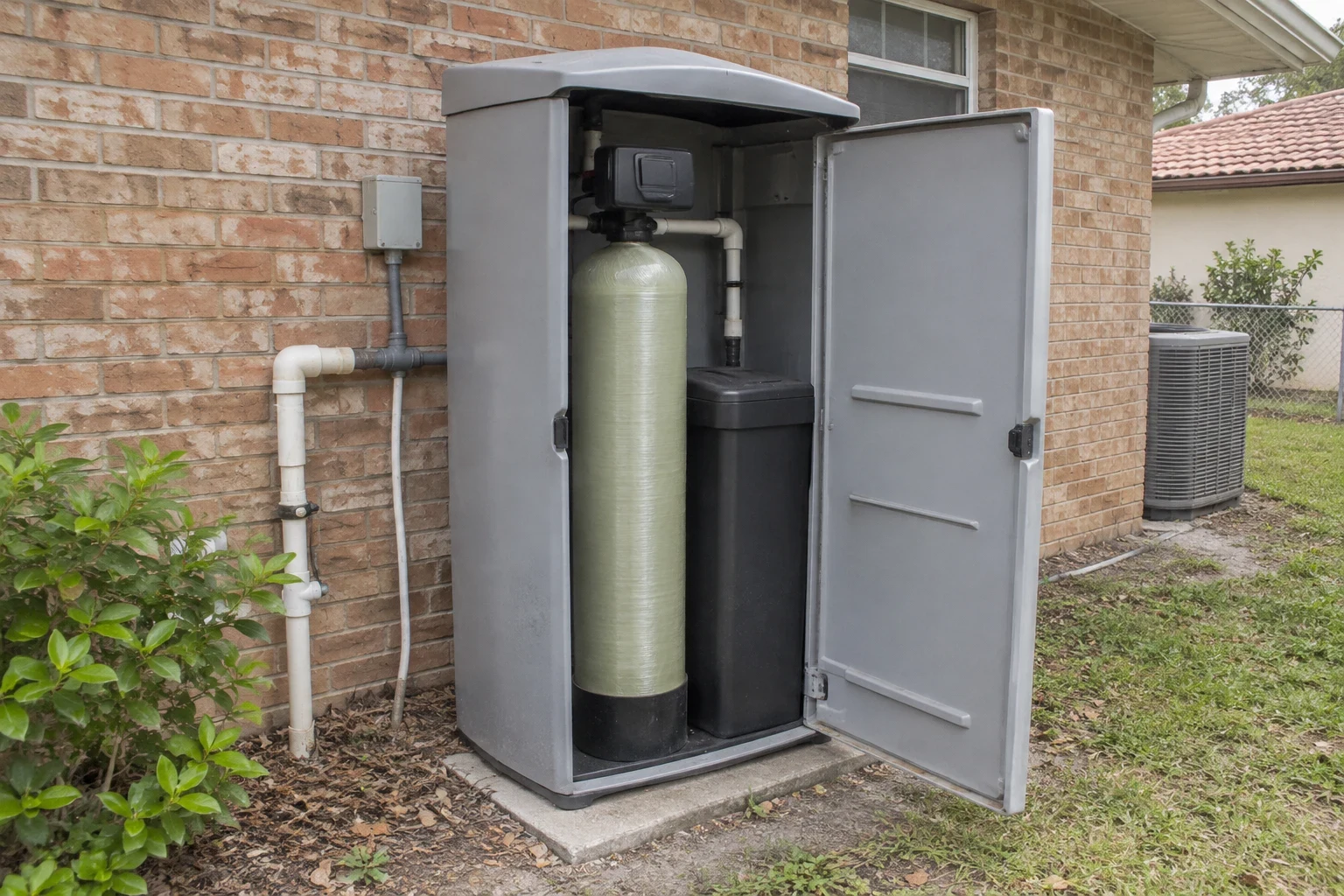
Yes, and in this area it often does. We set the tanks on a level pad and cover the control valve, because Florida sun breaks down plastic housings over time and rain can get into the electronics. We also place everything so you can still reach the wellhead.
What maintenance does it need?
Plan on swapping prefilter cartridges, checking the air-injection cycle now and then, keeping salt in a softener, and replacing a UV lamp yearly if you have one. We provide ongoing customer support for maintenance, filter replacements, and service needs after installation. When something comes due, one phone call gets it handled.
Is the installation covered?
Yes. Our installation work on a well water system comes with a 1-year workmanship warranty. If a fitting we made or a connection we ran gives you trouble in that first year, we come back and correct it.
Get Your Well Water Sorted Out
Start with the symptoms: the smell at the tap, the color in the toilet bowl, the crust on the showerhead. From there we can explain which treatment stages probably suit your well and how the visit will go.